Background
Oral diseases, particularly dental caries, remain a major but preventable public health issue among children in low-resource settings. A school-based oral health screening conducted School in Mogadishu assessed 102 children using WHO standardized tools. The findings reveal a moderate but largely untreated burden of dental caries, reflecting systemic gaps in prevention, access to care, and health awareness.
Key Findings
- High burden of untreated dental caries:
44.1% of children were affected, with 43.1% having untreated decay. - Low access to treatment services:
The Care Index (~6%) indicates very limited access to restorative dental care. - Inadequate preventive practices:
While toothbrush (73.5%) and toothpaste use (83.3%) are common, only 47.1% use fluoride toothpaste, and flossing is rare (2.9%). - Missed opportunity for early intervention:
32.4% of children require preventive care, and most are still in early, manageable stages of disease. - System-level gaps:
Weak preventive systems, limited integration into primary healthcare, and low community awareness contribute to poor oral health outcomes.
Policy Implications
The findings highlight an urgent need to shift from treatment-based approaches to preventive, school-centered oral health strategies. Without early intervention, untreated dental caries may lead to pain, infection, poor school performance, and long-term health complications. Strengthening oral health systems is essential to reduce disease burden and improve child health outcomes in Somalia.
Recommended Policy Actions
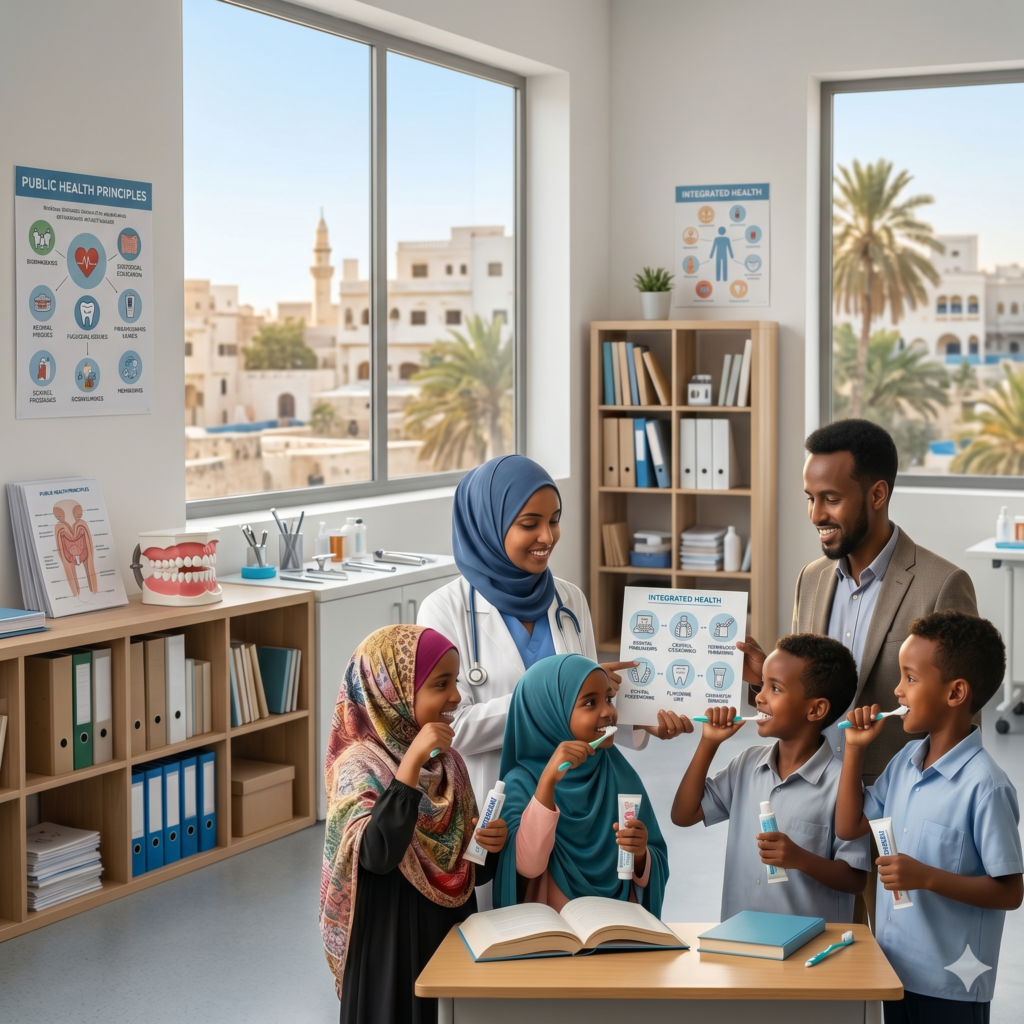
- Strengthen School-Based Preventive Programs
- Implement supervised toothbrushing programs
- Promote the use of fluoride toothpaste
- Introduce routine oral health screening in schools
- Integrate Oral Health into Primary Healthcare (PHC)
- Include oral health services in Somalia’s Essential Package of Health Services (EPHS)
- Ensure accessibility of preventive and basic treatment services
- Expand Preventive Dental Services
- Provide fissure sealants and early caries management
- Establish regular outreach programs targeting schoolchildren
- Enhance Oral Health Education and Behavior Change
- Promote daily brushing (twice per day)
- Reduce frequency of sugar consumption
- Target both children and parents with awareness campaigns
- Strengthen Policy and Health System Support
- Develop and implement a national oral health policy
- Regulate and standardize oral health services
- Invest in workforce development and training
- Improve Financing and Coverage
- Integrate oral health into Universal Health Coverage (UHC) frameworks
- Expand funding for preventive services rather than only emergency care
Conclusion
The oral health status of schoolchildren in Mogadishu demonstrates a critical opportunity for early, cost-effective intervention. Prioritizing preventive strategies, strengthening health systems, and integrating oral health into primary care can significantly reduce disease burden and improve long-term health outcomes.